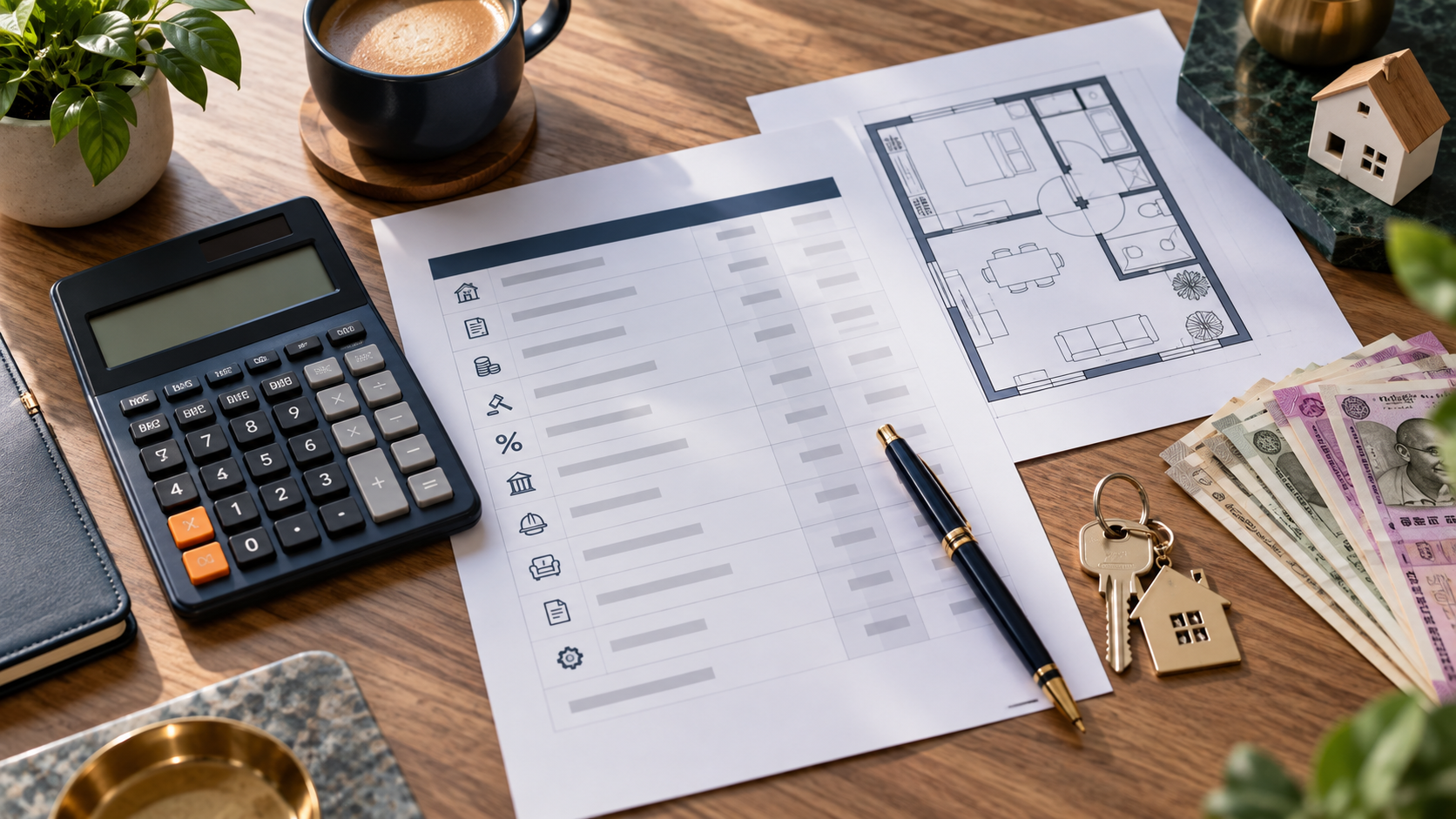
A property can appear affordable until the buyer adds every expense outside the advertised price. These charges are not always hidden in a legal sense, but they may be missing from advertisements, excluded from the starting price or discussed only after the buyer has shortlisted a unit.
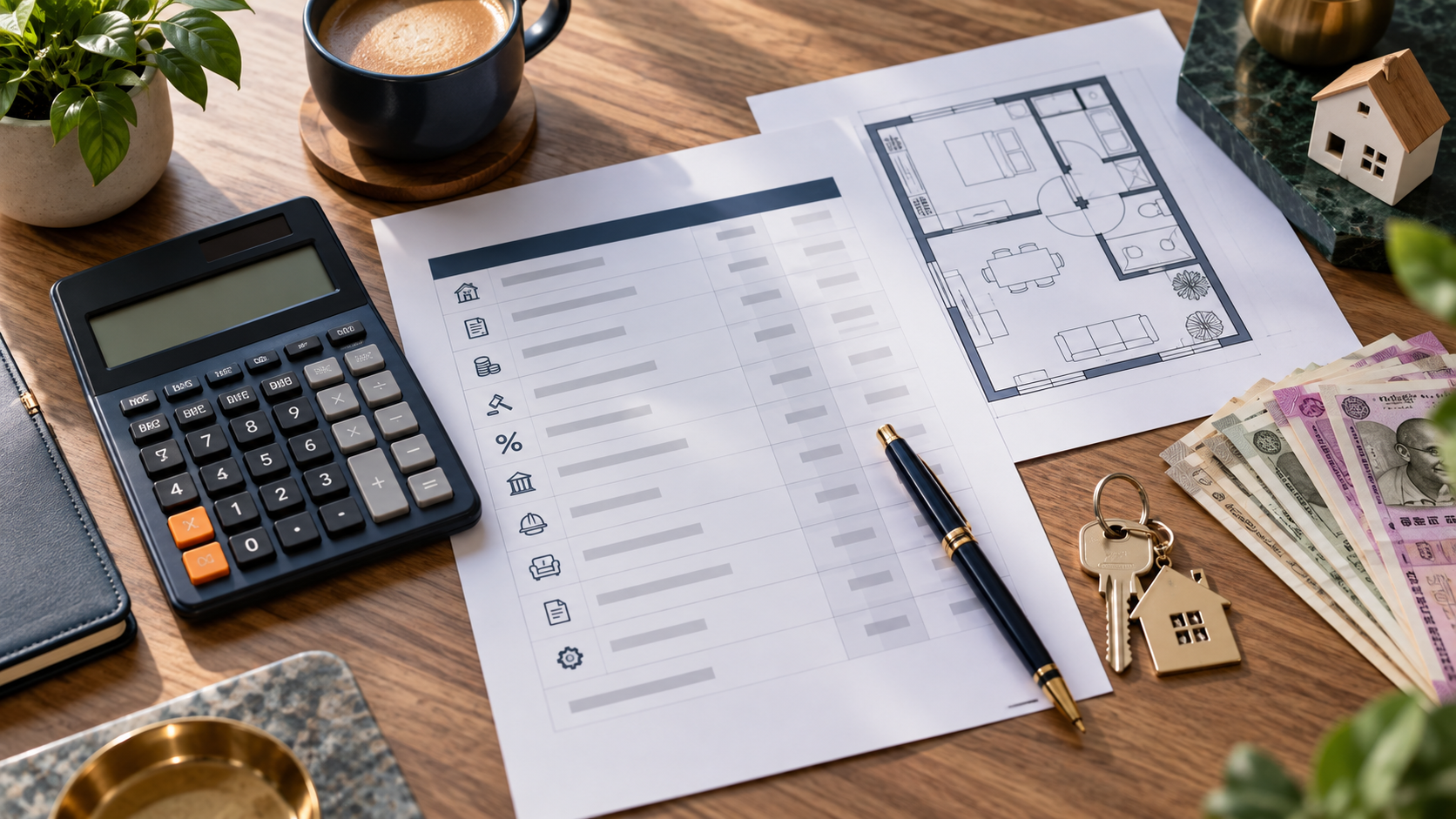
Before booking, request a dated and itemised cost sheet. Confirm which amounts are fixed, estimated, refundable, optional or payable directly to a government authority. Rates and tax treatment can change, so verify the current rules for your state, property type and transaction date.
First-time purchasers should also review the first-time homebuyer guide before deciding how much of their savings can safely be used for the down payment and additional charges.
What Costs Should Be Included in a Complete Property Budget?
A complete property budget should cover four main categories: the basic property cost, statutory payments, project or financing charges and post-possession expenses.
| Cost category | Common examples | What the buyer should do |
|---|---|---|
| Property cost | Base price, floor premium and location premium | Request a configuration-wise cost sheet |
| Statutory costs | Stamp duty, registration and applicable taxes | Verify the latest government rules |
| Project and finance costs | Parking, club charges, loan processing and legal review | Separate compulsory and optional charges |
| Post-possession costs | Interiors, maintenance, utilities, repairs and moving | Prepare a separate possession budget |
1. How Much Should You Budget for Stamp Duty and Registration?
Stamp duty and registration-related charges are major transaction costs. The applicable amount can vary according to the state, property value, buyer category and transaction details. It may be calculated using the transaction value, circle rate, guidance value or another prescribed basis.
Do not use a general percentage from an old article as your final estimate. Check the relevant state registration department or obtain professional advice based on the exact transaction.
The advertised starting price will frequently exclude these charges. This is why buyers should not compare two properties using only their displayed base prices.
2. When Can GST or Other Tax Treatment Apply?
Tax treatment may depend on whether a property is under construction, completed, residential, commercial or included within a particular scheme. The amount may also depend on how different components are described in the agreement.
Buyers comparing DLF under-construction projects should ask for a written tax breakup for the exact unit and payment plan. Confirm the position with a qualified tax professional instead of assuming that the treatment of another person’s purchase applies to yours.
3. Can Property Buyers Have Tax-Deduction or Reporting Obligations?
Certain property transactions may create tax-deduction and reporting responsibilities for the buyer. Applicable thresholds, procedures, forms and payment timelines can change.
Confirm the transaction value, seller status, timing and filing procedure through the Income Tax Department or a qualified adviser. Purchases involving a non-resident seller can have different requirements and should receive specialist attention.
4. Are Parking, Club and Amenity Charges Included in the Price?
A project cost sheet may contain separate charges for parking, club membership, power backup, infrastructure, firefighting systems, utility connections or other facilities. Ask which charges are compulsory, optional, refundable or recurring.
Also confirm what the agreement says about ownership or usage rights. A marketing label should not be treated as the legal description of a facility.
For example, buyers researching the latest DLF One Midtown price should request a complete written breakup instead of relying only on the starting price displayed online.
5. What Are Preferential Location and Unit Premiums?
Developers may charge additional amounts for higher floors, corner units, park-facing apartments, particular directions, larger balconies or preferred positions within a development.
Compare the premium with the practical benefit. A park view may be valuable, but buyers should check whether another tower, road or future phase could affect that view.
When using a DLF projects Gurugram price list, remember that the displayed range can cover different towers, configurations, floors and views. The exact unit cost may therefore be different.
6. What Maintenance Deposits May Be Payable?
At possession, buyers may need to pay an interest-free maintenance deposit, advance maintenance, sinking fund, corpus contribution or other community-related charges.
Ask who will hold the funds, how long the advance covers, when regular billing will begin and how future maintenance charges will be calculated. In a large development, confirm whether amenities will open together or in stages.
Buyers should also estimate how maintenance could change after the project becomes fully occupied. A larger unit or premium community may create a higher recurring obligation.
7. Which Home-Loan and Financing Costs Should Be Included?
Home-loan expenses may include processing fees, valuation charges, legal review, documentation, account-related fees and insurance. Some expenses may be negotiable, while others may be payable to third-party service providers.
Compare the complete loan terms, not only the advertised interest rate. Confirm whether bundled insurance is optional and understand how a floating-rate reset could increase the EMI, extend the loan tenure or affect both.
Also consider the total interest payable over the expected loan period. A slightly larger loan taken only to cover additional project charges can materially increase the long-term ownership cost.
8. Why Should Buyers Budget for Legal and Technical Due Diligence?
An independent lawyer or technical inspector creates an additional upfront cost, but their review may identify issues that are not visible in advertisements, brochures or sales presentations.
Depending on the property, buyers may need to budget for title review, agreement review, document searches, inspection and professional advice. Do not assume that a lender’s legal assessment was completed solely for your protection or that it covers every contractual risk.
Buyers should independently verify RERA-registered DLF projects and ensure that the selected unit belongs to the project phase mentioned in the official registration.
9. How Much Can Interiors, Utilities and Moving Cost?
A newly purchased home may require wardrobes, lighting, appliances, curtains, safety grills, internet installation, utility deposits and professional moving services. A bare or semi-finished apartment may need a substantial fit-out budget before it becomes comfortable to occupy.
Prepare a room-by-room estimate and include a contingency for changes that become necessary after final measurements are taken.
Even buyers considering DLF ready-to-move flats should inspect the exact unit and confirm which fixtures, fittings and appliances are included in the transaction.
10. Which Recurring Costs Continue After Possession?
Property tax, community maintenance, utilities, insurance, repairs and periodic replacement of equipment continue after the purchase has been completed.
Investors should also budget for vacancy periods, brokerage, furnishing, tenant-related repairs and maintenance between tenancies. These expenses must be considered when calculating the realistic rental return.
A home that is affordable to purchase but difficult to maintain can create long-term financial stress. Include at least the first year of predictable ownership expenses in your decision model.
How Should Buyers Compare DLF Flats Price per Square Foot?
When comparing DLF flats price per sq. ft., confirm which area measurement is being used. Carpet area, built-up area and saleable area are not interchangeable.
Two properties can have a similar total price but offer different usable space. Compare carpet area, room dimensions, total acquisition cost and recurring charges before deciding that one option provides better value.
How Can You Build an All-In Property Budget?
Create four budget columns:
- Base property cost: Basic sale price and unit premiums
- Statutory costs: Stamp duty, registration and applicable taxes
- Project and financing costs: Parking, club, maintenance deposits, loan fees and legal review
- Post-possession costs: Interiors, utilities, moving, repairs and recurring ownership expenses
Mark every amount as confirmed or estimated and record where the figure came from. Compare shortlisted projects using cost sheets prepared on the same date and with the same assumptions.
Do not plan down to the last rupee. Keep an emergency reserve and ask the seller or developer to confirm in writing which amounts can change and which agreement clause permits the change.
What Documents Should You Request Before Booking?
- A dated and itemised cost sheet
- The applicable RERA registration details
- The proposed payment schedule
- The draft allotment or buyer agreement
- The approved unit layout and specifications
- A list of compulsory and optional charges
- Written cancellation and refund terms
- Possession-related payment information
Use the available DLF project brochure download options for initial research, but treat the latest agreement, official registration and written cost sheet as the more important records.
Conclusion: What Is the Real Cost of Buying a Property?
The correct property budget is the amount required to purchase, finance, register, prepare and comfortably maintain the home. Looking beyond the base price makes project comparisons fairer and reduces unpleasant surprises before possession.
Request a complete cost sheet for every shortlisted property and compare the all-in totals using the same date and assumptions. If you need the latest project price, payment plan or availability, use the DLF project enquiry form to request current information.
About the Author
Sumit Purohit
Real-estate content researcher and digital marketing professional covering DLF projects, RERA verification and practical homebuyer guidance.
View author profile →