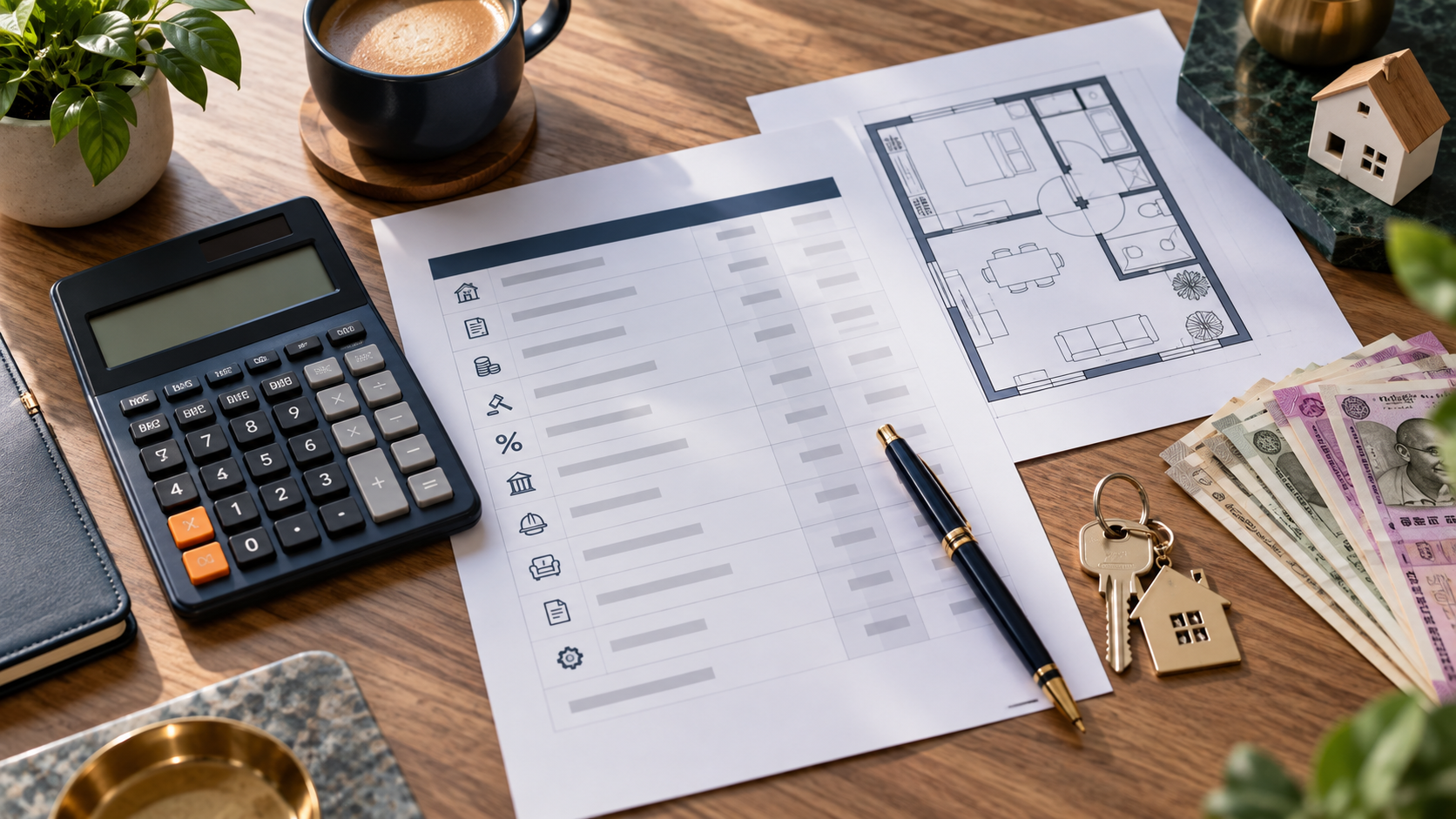
Most buyers eventually face the same choice: purchase a completed home that can be inspected now, or book an under-construction home that will be delivered later. Neither option is automatically better.
A ready property offers greater visibility and faster use. An under-construction property may offer staged payments and more unit choices, but it requires careful assessment of approvals, construction progress, funding and delivery risk.

What Is a Ready-to-Move Property?
A ready-to-move home is physically complete and available for possession, subject to the required project documentation and sale process. Buyers can inspect the actual unit or a closely comparable completed unit, experience the approach road and understand the occupied community.
The phrase 'ready' should still be verified. Ask for the applicable completion or occupancy documentation, utility status, maintenance structure and details of any unfinished phase within the larger development.
What Is an Under-Construction Property?
An under-construction property is sold before physical completion. Payment is generally linked to a schedule that may be construction-based or time-based, depending on the agreement. The buyer selects using approved plans, specifications, model units and disclosed timelines.
Because delivery will occur later, the developer's record, project registration, phase details, construction progress and agreement terms become especially important.
What Are the Main Differences Between Ready-to-Move and Under-Construction Property?
Possession: a completed property may suit someone who needs a home soon or wants immediate rental use. An under-construction home is more suitable when the buyer can wait and has a backup plan if delivery changes.
Inspection: ready homes allow closer review of light, ventilation, views, finishes and common areas. With under-construction homes, confirm which elements are contractual specifications and which are only illustrative.
Cash flow: ready homes may require funding in a shorter period. Under-construction payments can be spread across milestones, but a buyer who is also paying rent must plan for overlapping expenses.
Choice: early-stage projects may offer more floors, directions and layouts. In a completed project, available inventory may be narrower, although the buyer can make a more informed physical assessment.
Uncertainty: completed homes reduce construction and timeline uncertainty, but they still require legal, structural and community-level checks. Under-construction purchases carry greater dependence on future execution.
What Should You Check Before Buying a Ready-to-Move Home?
Verify the exact apartment rather than only visiting a sample flat. Check seepage, plumbing, electrical points, doors, windows, lift condition, parking, mobile coverage and noise. Ask about occupancy, monthly maintenance, sinking funds, unsold inventory and planned construction nearby.
If the home is a resale, confirm ownership, outstanding dues, encumbrances, society or association requirements and the condition of fixtures included in the transaction.
What Should You Check Before Buying an Under-Construction Home?
Search the relevant RERA portal and match the registration to the correct phase. Review the disclosed completion date, approvals, progress updates and promoter details. Compare the payment plan with actual construction stages and understand the clauses covering delays, changes, cancellation and refunds.
Ask how the project is financed, which amenities belong to the phase you are buying in and when common facilities are scheduled to become usable.
How Can You Choose Between the Two Options?
Choose based on your strongest constraint. If timing and certainty matter most, a verified completed home may be more appropriate. If you can wait, want broader unit choice and prefer staged payments, a well-verified under-construction project may fit.
Compare the total cost at the expected possession date, not only today's quoted price. Include rent during construction, loan interest, taxes, maintenance, fit-out and the financial value of waiting.
How Can You Compare Ready and Under-Construction DLF Projects?
Buyers who need immediate possession can begin with DLF ready-to-move flats and verify the exact inventory, occupancy documentation and complete cost before deciding. Buyers with a longer timeline can compare DLF Arbour Sector 63 and other DLF under-construction projects.
For a focused comparison of possession stages, also read our guide to new-launch vs ready-to-move property. Always request the latest construction status, payment plan and written cost sheet for the exact tower or unit.
Conclusion: What Is the Right Choice for You?
Ready-to-move and under-construction homes solve different buyer problems. The right decision is the one that matches your possession timeline, cash flow and tolerance for execution risk.
Whichever route you choose, verify the project record, obtain all charges in writing and have the agreement and property documents reviewed independently.